Research Award 2025 (4)
Dr Susan Wang, Experimental Medicine and Rheumatology, William Harvey Research Institute, Queen Mary University of London
Project: Decoding the Epigenetics of TNF-alpha Inhibitor Treatment Response in Rheumatoid Arthritis Using Whole-Genome Bisulfite Sequencing of Synovial Tissue
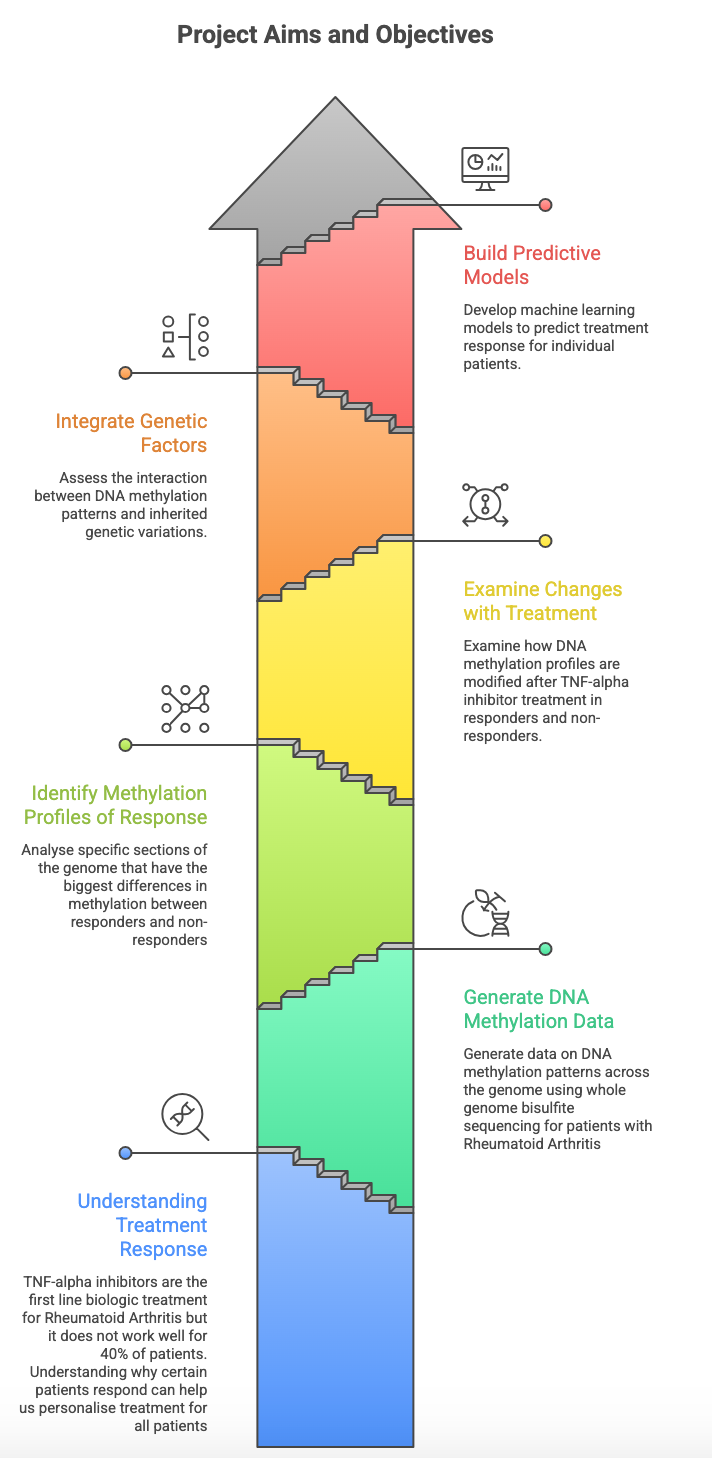
Rheumatoid arthritis is a common autoimmune disease characterised by painful joint inflammation, progressive damage and disability. Biologic therapies, particularly TNF-alpha inhibitors (TNFi), have revolutionised management but about 40% of patients do not experience an adequate response. TNFi are the first-line biologic treatment for all eligible Rheumatoid Arthritis patients but there is no reliable way to predict who will respond. This trial-and-error approach means many people endure months of ineffective treatment, ongoing pain and unnecessary side effects, while the NHS faces high costs from wasted medication.
This project aims to understand why some people respond well to TNFi while others do not. It will study DNA methylation – small chemical marks that act as switches to turn genes on or off – in tissue taken from inflamed joints. Using a highly detailed technique called whole-genome bisulfite sequencing, we will map these marks across the entire genome to see how they differ between responders and non-responders before treatment begins, and how they change after therapy. By linking this information with gene activity and genetic variation, we aim to uncover how these molecular differences influence TNFi treatment response in individuals. Advanced machine-learning models will then be used to test whether these DNA patterns can accurately predict who will benefit from TNFi treatment.
This research has the potential significantly to improve patient care by helping patients receive the most effective treatment sooner, reducing side effects and long-term disability, while saving NHS resources and moving RA treatment closer to truly personalised medicine.